Traffic rules can often be confusing, especially when it comes to situations like a three-way intersection involving a police car and two civilian cars. So, which car goes first? Let’s break down the rules and opinions to determine the correct order.
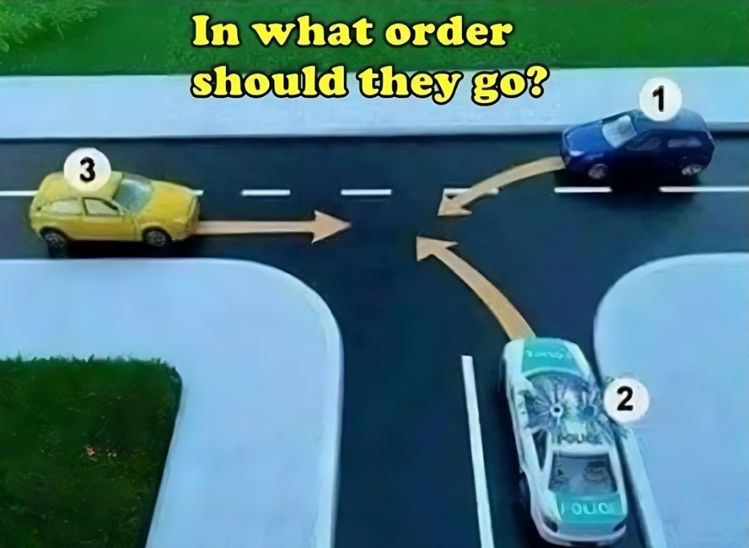
Driving at intersections can be tricky, and when there’s a mix of different vehicles, including emergency ones like police cars, the decision of who moves first depends on a set of well-established road rules. But when opinions vary, how do we settle the debate? In this article, we’ll explore the factors that determine the right of way and analyze the situation step-by-step.
Understanding the Basics of Right of Way at Intersections
Before diving into the specific scenario, let’s revisit the basic principles of traffic laws and right-of-way rules. Right-of-way essentially dictates which vehicle has the priority to proceed at intersections, crosswalks, or junctions, ensuring safety and preventing accidents.
When you approach any intersection, the decision on who moves first is based on:
- Traffic lights and road signs: These typically control traffic.
- Emergency vehicles: Police cars, ambulances, and fire trucks with their sirens on have priority.
- Driver actions: Drivers must yield or stop based on the other vehicles’ direction of travel.
What Happens When There’s a Police Car Involved?
In our scenario, there are three vehicles: a police car and two civilian cars, each intending to go in a different direction. How do you decide who moves first?
When a police car is part of the equation, the situation changes. According to traffic laws, emergency vehicles like police cars have the right of way when their sirens or lights are on. So, if the police car is honking or has its sirens on, it is considered to be on duty, giving it the priority to go first.
However, if the police car isn’t honking or using its sirens, it follows the same rules as any other vehicle on the road, meaning it must follow regular traffic laws and yield when necessary.
The Opinion: “If the Police Car is Honking, It Goes First”
Some believe that if the police car honks, it means they are on duty and must move first. This makes sense because emergency vehicles like police cars are usually responding to critical situations. In such cases, they are granted immediate priority to clear the road and reach their destination quickly.
In this opinion:
- Police car (with siren) moves first.
- Car number 3 (going straight) follows because vehicles traveling straight have priority over those turning.
- Car number 1 (turning left) goes last because left-turning vehicles must yield to those going straight.
This sequence makes logical sense when you consider standard road rules and the specific conditions of the intersection.
CONTINUE READING…
Author: awestories24.com