The 1950s were a time of rapid innovation, particularly in the realm of beauty. As women increasingly sought ways to replicate salon results at home, the bonnet hair dryer emerged as a game-changing invention. Unlike the compact, handheld dryers we’re familiar with today, the bonnet dryer was a more elaborate setup. It featured a soft cap or bonnet that connected to a hose, which in turn was attached to a portable or tabletop unit. This design allowed warm air to circulate evenly around the head, ensuring consistent drying and setting of hairstyles.
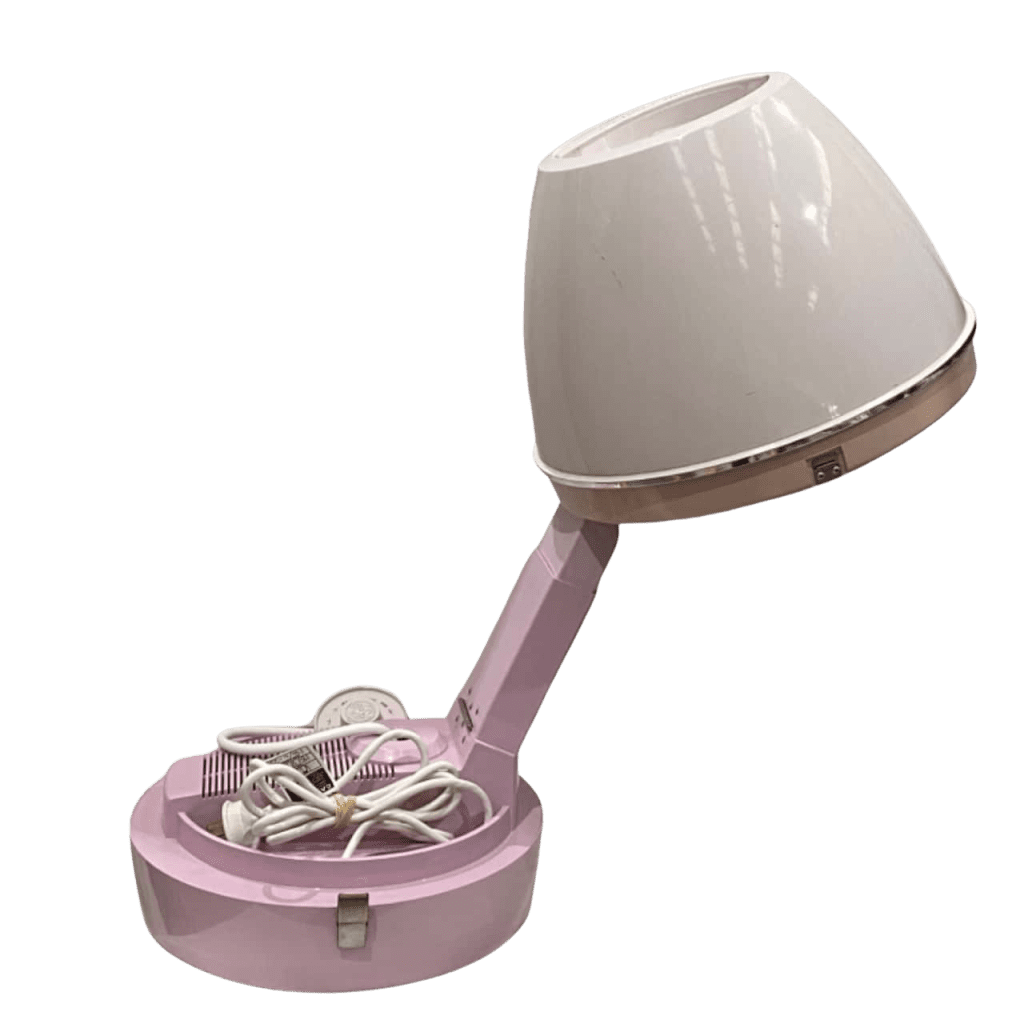
One of the most appealing aspects of the bonnet hair dryer was its hands-free design. Women could set their hair in rollers, place the bonnet over their heads, and go about their daily activities while their hair dried. This multitasking ability was a significant advantage, allowing users to read, cook, or even relax while achieving perfect curls. The bonnet hair dryer quickly became a favorite among those who valued both beauty and efficiency.
By the 1960s and 1970s, the bonnet hair dryer had become a fixture in households across America and beyond. Its popularity was fueled by the desire for the voluminous, polished hairstyles that defined these decades. Women used the dryer to set their curls, achieve glamorous waves, and maintain the elaborate updos that were in vogue at the time. The bonnet hair dryer was more than just a tool—it was an essential part of the beauty ritual, representing a commitment to meticulous and well-groomed hair.
Using a vintage bonnet hair dryer was a straightforward, albeit time-consuming, process. First, users would wash their hair and set it in rollers. Next, they would carefully position the bonnet over their rollers, making sure it was secure and comfortable. Once the dryer was turned on, warm air would be evenly distributed around the head, gently drying the hair without the need for constant hand-holding or repositioning. This slow, steady drying process was ideal for setting curls, giving the hair a smooth and voluminous finish that was hard to achieve with other methods.
Today, the vintage bonnet hair dryer is more than just a functional device—it’s a cherished relic of the past. For many, it evokes memories of a time when beauty routines were more leisurely and unhurried. The act of sitting under a bonnet dryer, perhaps with a cup of tea and a good book, is a snapshot of a simpler time, when self-care was a ritual to be savored. This nostalgia is a big part of why vintage bonnet hair dryers are still admired and collected today.
Author: awestories24.com